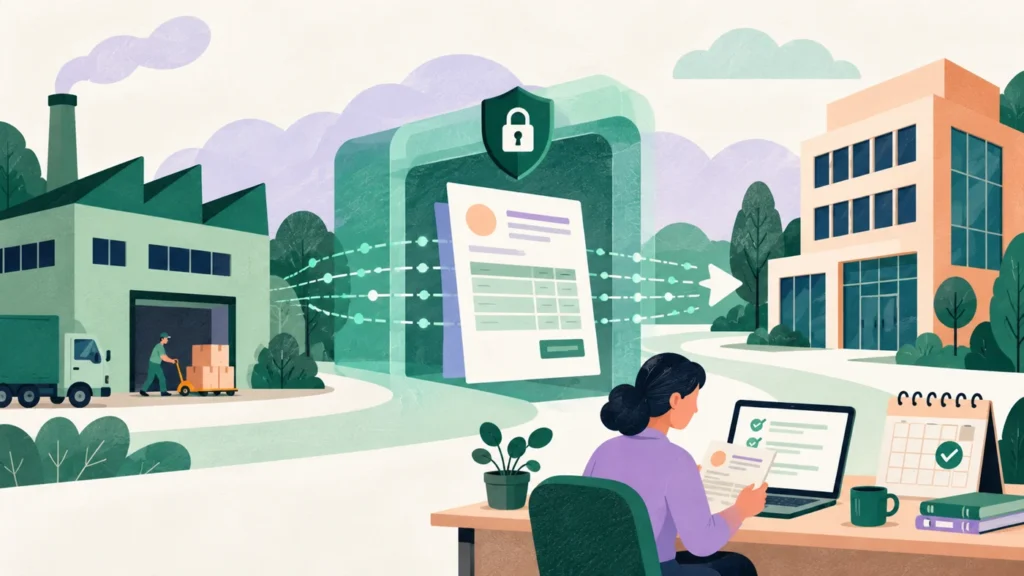
Your accounting software sends invoices by email. Your customers receive a PDF. Everything feels digital. So why does UAE e-invoicing still need a project?
Because the change is about structured invoice data moving between systems, not simply sending a document online. That distinction matters when you are deciding what to fix, who should own it and how much work remains.
The two dates large businesses need to separate
In its 27 September 2026 update, the UAE Ministry of Finance confirmed that in-scope entities with annual revenues of AED 50 million or more must appoint an Accredited Service Provider by 30 October 2026. Mandatory implementation for that phase remains 1 January 2027.
The provider appointment deadline was extended from July. The implementation date was not. If an older checklist in your shared folder still says 31 July, update it and make sure your team is working from the same version.
These dates do not mean every UAE business has the same deadline. Confirm your entity’s scope, revenue classification and applicable exclusions against the official Ministry portal and current legislation. Do not assume that being outside this first phase removes the need to prepare.
Start with five questions, not a software demo
The following is our suggested readiness discussion. It is a project checklist, not an additional legal requirement.
- Who owns the decision? Name the finance lead, systems contact and person authorised to approve the provider arrangement. A project shared by everyone can easily be owned by nobody.
- Has the provider appointment actually been completed? A sales call, quotation and signed arrangement are different stages. Check the position with your chosen provider and keep the relevant evidence.
- Where does invoice data begin? Map the journey from sales order or billing system to the ledger. Include manual invoices and separate business units.
- Which records need cleaning? Review customer and supplier identifiers, tax details, addresses and the fields required for your transactions. Ask who will correct missing information.
- What will you test before January? Agree a testing plan with your provider that covers ordinary invoices and the exceptions your business actually encounters.
A PDF is not the same thing as an eInvoice
The Ministry’s portal distinguishes structured eInvoices from unstructured PDFs, scans, images and emails. Converting the same PDF into another attachment does not address the underlying data exchange.
Take one ordinary invoice and trace it through your proposed process. Can the team explain where each required field comes from? What happens if a customer record is incomplete? Who sees a rejection, and how is it resolved? Those questions reveal more than a polished demonstration.
Give exceptions their own owner
A successful test should do more than prove that a clean invoice can travel through the system. Ask your provider how your configuration handles errors, credit notes and transaction types relevant to your business. Decide who investigates a failed transmission and how finance knows it has been resolved.
Keep a short issue log with an owner and next action for each item. You do not need a complicated dashboard to see whether missing data, integration work or internal decisions are slowing progress.
What to do this week
Put a 30-minute readiness meeting in the diary. Bring your provider status, one invoice example, a list of systems and your unresolved questions. Leave with named owners and a realistic testing schedule.
If your team needs help untangling the finance process or preparing its data, share your e-invoicing challenge with Finaxil. Tell us where you are stuck so the conversation can start with your actual workflow.
Checked against official information on 24 October 2026. This article provides general preparation guidance, not a determination of your entity’s legal obligations. Recheck the Ministry’s latest notices before acting.
Create share images for Instagram & WhatsApp Status
Choose a feed card or a full-height story/status image. Download it, then post it from your app. Add the article link as a story link where supported, or paste it into your caption or status text.